

Outpatient therapy is a valuable and effective form of mental health care for millions of people, allowing individuals to attend sessions, manage symptoms, and continue living at home. However, there are times when weekly therapy sessions and medication management simply are not enough to address the full scope of a person’s needs. Recognizing when outpatient therapy isn’t enough is one of the most important steps a person or family member can take toward lasting recovery. Harmony Hills, a residential mental health treatment center in Altoona, Florida, offers compassionate, evidence-based care designed to help individuals stabilize, heal, and build a foundation for long-term wellness.
Understanding Outpatient Therapy and Its Role in Mental Health Care
Outpatient therapy plays a critical role in the mental health care continuum, serving as the first line of support for people managing a wide range of emotional and psychological challenges. Understanding what outpatient care offers, and where its limitations lie, helps individuals and families make informed decisions about treatment. For those whose needs exceed what outpatient settings can provide, knowing the full range of options is essential.
What Is Outpatient Therapy and How Does It Work?
Outpatient therapy involves scheduled appointments with a licensed mental health professional while the individual continues to live at home. Sessions typically occur once or twice per week and may include individual counseling, group therapy, or psychiatric medication management. This model works well for people with mild to moderate symptoms who have a stable home environment and strong support systems. It offers flexibility and allows individuals to maintain their daily responsibilities while receiving professional care.
Common Types of Outpatient Mental Health Services
Outpatient mental health services vary in intensity and structure. Common options include:
- Standard outpatient therapy: Weekly or biweekly individual or group counseling sessions that provide consistent, low-intensity support.
- Intensive outpatient programs (IOP): Multiple sessions per week, often three to five days, for those who need more structure without full-time residential care.
- Partial hospitalization programs (PHP): Daily structured programming without overnight stays, representing the most intensive outpatient option.
- Psychiatric services: Medication evaluation, management, and monitoring to support overall symptom stability.
Each level is designed to meet different needs, with PHP being the most intensive option before residential treatment.
Who Is Outpatient Care Best Suited For?
Outpatient care is most effective for individuals with mild to moderate mental health symptoms who are not at immediate risk of harm. It is also appropriate for those who have completed a higher level of care and are transitioning back to everyday life. People with strong social support, stable housing, and the ability to manage daily responsibilities tend to benefit most. When these conditions are not present, or when symptoms are severe, outpatient care may not provide enough structure or support.
Limitations of Outpatient Therapy Compared to Inpatient Options
Outpatient therapy has meaningful limitations, particularly for individuals with complex or severe mental health conditions. The gaps between sessions can be dangerous for those in crisis or experiencing rapidly worsening symptoms. Outpatient settings also cannot remove individuals from environments that may be contributing to their distress. Without the structure, supervision, and immersive care offered by residential mental health treatment in Florida, some people struggle to make meaningful progress and achieve lasting stability.
When Outpatient Therapy Isn’t Enough: Recognizing the Need for Inpatient Care
There comes a point for some individuals when consistent outpatient therapy no longer produces the progress needed for safe and stable functioning. This can happen when the underlying condition is more complex than outpatient care can adequately address, or when environmental stressors continue to interfere with healing. Knowing the warning signs early can prevent a crisis and open the door to more effective care.
Why Mental Health Symptoms May Worsen Despite Consistent Outpatient Therapy
Even with regular therapy attendance and medication compliance, some individuals experience a plateau or decline in their mental health. Factors such as trauma exposure, unstable living situations, co-occurring disorders, or a lack of social support can all undermine outpatient progress. When these barriers are present, a more immersive treatment environment may be necessary to address the full scope of what is driving symptoms forward.
Mental Health Conditions That Often Require Inpatient Treatment
Certain diagnoses are more likely to require the intensity of inpatient or residential care. These include:
- Severe depression or treatment-resistant depression
- Bipolar disorder with frequent mood episodes
- Post-traumatic stress disorder (PTSD)
- Borderline personality disorder (BPD)
- Eating disorders
- Severe anxiety disorders
- Conditions involving self-harm or suicidal ideation
According to the National Institute of Mental Health, approximately 14.1 million adults in the United States experienced serious mental illness in 2023, many of whom required care beyond standard outpatient services.
The Importance of Early Intervention When Outpatient Therapy Isn’t Enough
Waiting too long to seek a higher level of care can allow symptoms to escalate into a crisis. Early intervention, when warning signs first appear, can prevent hospitalization, reduce suffering, and improve long-term outcomes. Recognizing when outpatient therapy isn’t enough and acting on that recognition is not a sign of failure. It is a proactive and courageous step toward getting the right level of support at the right time.
Signs You May Need Residential Mental Health Treatment

Understanding the specific warning signs that indicate a need for residential care can help individuals and families take action before a crisis occurs. The following signs are important indicators that a higher level of care may be necessary.
If symptoms such as depression, anxiety, or mood instability continue to worsen despite consistent therapy and medication, outpatient care may no longer be sufficient. A lack of progress over several weeks or months is a clear signal that the current treatment plan needs to be reassessed. Residential mental health treatment offers a more intensive and immersive approach that can address the root causes of persistent symptoms more effectively.
When mental health symptoms begin to interfere with a person’s ability to meet basic responsibilities, it is a sign that more support is needed. Missed work, declining academic performance, or an inability to manage household tasks all indicate a significant level of impairment. Residential treatment provides the structure and daily support needed to help individuals regain functional stability.
Thoughts of self-harm or suicide require immediate and intensive intervention. Outpatient therapy alone cannot provide the level of monitoring and crisis support needed in these situations. Residential treatment ensures that individuals are safe, supervised, and receiving continuous therapeutic care during these critical moments.
Recurring emotional crises, severe panic attacks, or extreme mood swings that are not responding to outpatient treatment indicate a need for more intensive care. These episodes can be destabilizing and dangerous without proper support in place. A residential setting provides immediate access to clinical staff and therapeutic interventions around the clock.
Social withdrawal and isolation are common signs of worsening mental health, and when a person pulls away from their support network, it can accelerate mental health decline. This pattern also reduces the effectiveness of outpatient care, which depends heavily on the individual’s external stability. Residential treatment fosters connection, community, and peer support as part of the healing process.
An inability to maintain basic self-care, including sleep, nutrition, and personal hygiene, is a serious warning sign. These challenges often indicate that a person’s mental health has deteriorated to a point where more than weekly therapy is needed. Residential programs address these foundational needs through structured daily routines and holistic support.
Frequent visits to crisis stabilization units or repeated psychiatric hospitalizations suggest that the current level of care is not providing lasting stability. These patterns indicate a need for a more comprehensive and sustained treatment approach. Residential treatment offers the continuity of care needed to break this cycle and build a more stable foundation for recovery.
When mental health challenges occur alongside substance use, the complexity of treatment increases significantly. Outpatient care often lacks the resources to address both conditions simultaneously with the depth required. Harmony Hills offers integrated dual diagnosis treatment designed to treat co-occurring disorders together, improving outcomes for both conditions.
If a person and their treatment team agree that the current outpatient plan is no longer producing results, it is time to consider a higher level of care. Stagnation in treatment is a meaningful clinical indicator that the approach needs to change. Transitioning to residential care is not a step backward. It is a strategic move toward more effective and comprehensive healing.
Inpatient vs Outpatient: What Residential Treatment Offers That Outpatient Therapy Cannot
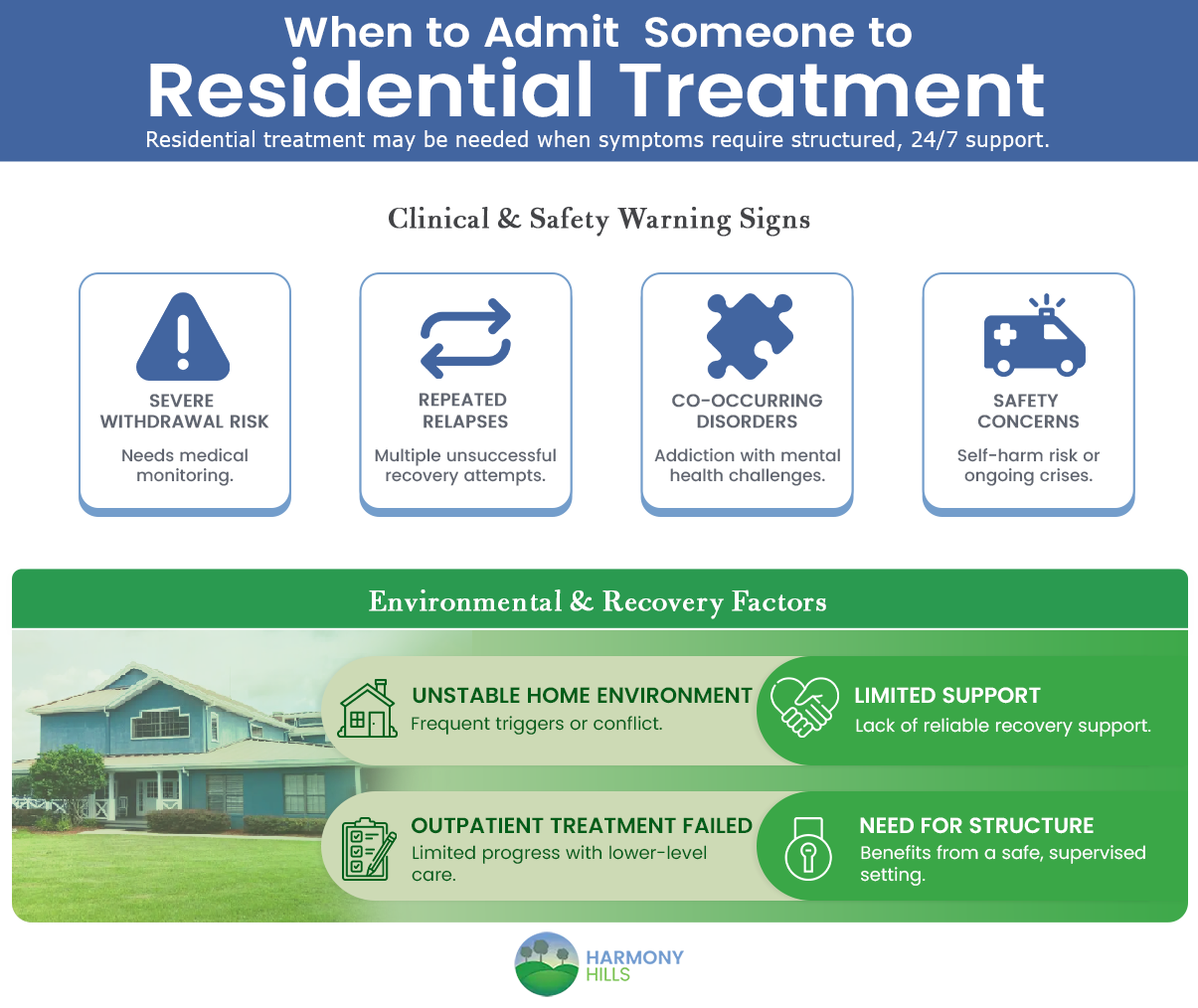
Residential treatment provides a depth and breadth of care that outpatient therapy simply cannot match. For individuals with complex or severe mental health needs, the differences between these two levels of care can be life-changing. Understanding what residential programs offer helps individuals and families make an informed decision about next steps.
One of the most significant advantages of residential treatment is continuous access to clinical support. Trained staff is available around the clock to respond to crises, monitor medication, and provide immediate therapeutic intervention. This level of supervision creates a safety net that outpatient care cannot offer, particularly for individuals at risk of self-harm or rapid symptom escalation.
Residential programs offer daily individual therapy, group therapy, and a range of evidence-based and holistic treatment modalities. These may include cognitive behavioral therapy (CBT), dialectical behavior therapy (DBT), trauma-focused therapies, mindfulness practices, and expressive arts therapies. This intensive therapeutic schedule accelerates progress and equips individuals with a broader set of coping tools than weekly outpatient sessions can provide.
A predictable daily schedule is itself therapeutic for many individuals struggling with mental health challenges. Residential treatment removes the chaos and unpredictability of everyday life and replaces it with a structured, supportive environment. This consistency helps regulate mood, improve sleep, and reinforce healthy habits that support long-term recovery.
Residential programs develop comprehensive, individualized treatment plans based on thorough clinical assessments. These plans address the full spectrum of a person’s needs, including mental health, physical health, trauma history, and social factors. This personalized approach ensures that each individual receives the specific care they need to achieve meaningful and lasting progress.
What to Expect in a Residential Treatment Program at Harmony Hills
Choosing to enter a residential treatment program is a significant and courageous decision. At Harmony Hills, every step of the process is designed to be as supportive, transparent, and compassionate as possible. From the first phone call through discharge planning, the team is with each individual every step of the way.
Upon admission, each individual at Harmony Hills undergoes a thorough clinical assessment covering mental health history, current symptoms, medical needs, trauma history, and personal goals for treatment. The results of this assessment inform a personalized care plan that guides every aspect of the individual’s treatment experience. No two plans are alike, because no two people are alike.
Harmony Hills offers a comprehensive range of evidence-based therapies, including CBT, DBT, EMDR for trauma, and group therapy. These are complemented by holistic approaches such as mindfulness, music therapy, and expressive therapies. This integrated approach treats the whole person, addressing emotional, psychological, and physical dimensions of mental health.
Harmony Hills recognizes that mental health challenges affect the entire family, and family therapy sessions, educational workshops, and ongoing communication with loved ones are built into the treatment process. Supporting families throughout the recovery journey strengthens the individual’s support network and improves long-term outcomes. Family members are treated as partners in recovery, not as bystanders.
Discharge planning begins early in the treatment process at Harmony Hills. Each individual leaves with a detailed aftercare plan that includes outpatient therapy referrals, community resources, and ongoing support connections. This continuity of care helps individuals maintain the progress they have made and reduces the risk of relapse or crisis after leaving residential treatment.
Finding the Right Level of Care: Is Outpatient Therapy Enough?

Determining the appropriate level of mental health care is not always straightforward, and a professional assessment is the most reliable way to identify whether outpatient therapy is sufficient or whether a higher level of care is needed. Individuals and families can begin by honestly evaluating whether current care is producing meaningful improvement. Consulting with a mental health professional for a formal level-of-care assessment is the most effective next step.
Benefits of Early Intervention and Transitioning to Inpatient Care
Transitioning to residential care before a crisis occurs leads to better outcomes and a shorter overall treatment timeline. Early intervention reduces the risk of hospitalization, prevents further deterioration, and gives individuals the best possible chance at sustained recovery. Acting on warning signs promptly is one of the most important things a person or family member can do to support long-term mental health.
How to Seek a Professional Assessment for Inpatient vs Outpatient Needs
Reaching out to a residential treatment center like Harmony Hills is a straightforward and confidential process. Admissions specialists can conduct an initial assessment, answer questions about the treatment process, and help determine the most appropriate level of care. No one has to navigate this decision alone. Professional guidance is available and accessible.
Taking the Next Step Toward Healing
Recognizing when outpatient therapy isn’t enough is a critical moment in a person’s mental health journey. It takes courage to acknowledge that more support is needed, and it takes strength to seek it. Harmony Hills is here to provide the compassionate, evidence-based residential care that individuals and families deserve. If symptoms are worsening, daily life is becoming unmanageable, or safety is a concern, now is the time to act. Contact Harmony Hills today to speak with an admissions specialist and take the first step toward lasting recovery.
Frequently Asked Questions
Outpatient therapy is no longer enough when symptoms continue to worsen despite consistent treatment, daily functioning is significantly impaired, or safety has become a concern. A professional level-of-care assessment can provide clarity and guidance on the most appropriate next step.
Outpatient treatment involves scheduled sessions while the individual lives at home, while inpatient or residential treatment provides 24/7 care, structured programming, and continuous clinical support in a live-in setting. Residential treatment is designed for individuals with more complex or severe mental health needs who require a higher level of structure and supervision.
Yes, residential treatment is highly effective for severe anxiety and depression, particularly when outpatient care has not produced adequate results. Intensive daily therapy, medication monitoring, and holistic support help individuals stabilize and develop lasting coping skills.
The length of residential treatment varies depending on the individual’s needs and clinical progress. Programs typically range from 30 to 90 days, with aftercare planning beginning early to support a smooth transition back to everyday life.
The admissions process at Harmony Hills begins with a confidential assessment conducted by an experienced admissions specialist. The team will review clinical needs, answer questions, verify insurance coverage, and help determine the most appropriate level of care for the individual.
Dr. Eric Kaplan is a board-certified psychiatrist with over three decades of experience in mental health, neurology, and forensic psychiatry. He is recognized for his expertise in treating a wide range of psychiatric conditions, including depression, bipolar disorder, anxiety disorders, substance use disorders, and traumatic brain injuries, as well as for his work in complex psychopharmacology.