


Self-harm, also known as self-injury, is a complex and often misunderstood behavior. If you’ve discovered that someone you care about is hurting themselves, you may feel overwhelmed, scared, or unsure of what to say.
Knowing what to say to someone who self-harms (and what not to say) can make a powerful difference. The right words can help them feel seen, supported, and more willing to seek help.
At Harmony Hills, we provide compassionate, evidence-based care for individuals struggling with self-harm and underlying mental health conditions. If you’re trying to support a loved one, this guide will walk you through how to respond with empathy and clarity.
Understanding Self-Harm
Before you can help someone, it’s important to understand why self-harm happens.
Self-harm is not always a suicide attempt, but it is a serious sign of emotional distress and can increase the risk of suicidal thoughts if left untreated. People may self-harm to:
- Release intense emotions like anger, sadness, or anxiety
- Feel something when experiencing emotional numbness
- Regain a sense of control
- Cope with trauma or painful memories
- Express feelings they cannot put into words
Self-harm is often linked to underlying mental health conditions such as depression disorders, anxiety disorders, PTSD, borderline personality disorder, and trauma-related disorders.
While self-harm may provide temporary relief, it reinforces unhealthy coping patterns and can escalate over time. That’s why early intervention and support are so important.
Mental Health Conditions Linked to Self-Harm
Self-harm rarely exists on its own. In most cases, it is a symptom of deeper emotional or psychological distress tied to underlying mental health conditions.
Understanding these conditions can help you better support someone who is struggling and recognize why self-harm feels like a valid coping mechanism for them.
Depression
Depression is one of the most common conditions associated with self-harm. Individuals with depression may experience:
- Persistent sadness or hopelessness
- Feelings of worthlessness or guilt
- Loss of interest in activities
- Emotional numbness
For some, self-harm becomes a way to feel something instead of a void of emotion, or to release overwhelming emotional pain.
Anxiety Disorders
People with anxiety often feel constantly overwhelmed, restless, or on edge. Self-harm may be used to:
- Relieve intense anxiety or panic
- Regain a sense of control
- Interrupt racing thoughts
The temporary relief reinforces the behavior, making it more likely to continue without intervention.
Post-Traumatic Stress Disorder (PTSD)
Trauma is one of the strongest predictors of self-harm.
Individuals with PTSD may struggle with:
- Flashbacks or intrusive memories
- Emotional dysregulation
- Dissociation (feeling disconnected from reality)
Self-harm may serve as a way to ground themselves, cope with distressing memories, or regain control over overwhelming emotions.
Borderline Personality Disorder (BPD)
Self-harm is particularly common in individuals with BPD due to intense emotional swings and difficulty regulating emotions.
They may experience:
- Fear of abandonment
- Intense, unstable relationships
- Rapid mood changes
- Impulsive behaviors
Self-harm can become a way to cope with emotional intensity or express internal pain that feels impossible to communicate.
Eating Disorders
Self-harm and eating disorders often overlap because both involve control and coping with emotional distress.
Individuals may struggle with:
- Body image issues
- Perfectionism
- Shame or self-criticism
Self-harm may occur alongside behaviors like restriction, bingeing, or purging.
Substance Use Disorders
Substance use can lower inhibitions and increase impulsive behavior, making self-harm more likely.
It can also:
- Intensify emotional instability
- Worsen underlying mental health conditions
- Reduce the ability to cope in healthy ways
ADHD or Autism
Individuals with ADHD or autism may self-harm due to:
- Emotional dysregulation
- Sensory overload
- Difficulty expressing feelings
- Impulsivity
This adds depth and aligns with current mental health conversations (and your audience).
Why Self-Harm Can Be Hard to Stop

If you’re trying to understand how to help someone who self-harms, one of the most important things to recognize is that self-harm is not simply a behavior someone can “choose” to stop.
For many individuals, self-harm becomes a deeply ingrained coping mechanism that serves a specific emotional purpose.
It Creates a Temporary Sense of Relief
Self-harm often provides immediate, short-term relief from overwhelming emotions such as anxiety, anger, sadness, or emotional numbness.
This relief may come from:
- A release of built-up emotional tension
- A shift in focus from emotional pain to physical sensation
- A temporary sense of control
While the relief doesn’t last, the brain begins to associate self-harm with feeling better (even if only briefly).
It Becomes a Learned Coping Habit
Over time, self-harm can become a conditioned response to distress.
When someone repeatedly turns to self-harm during difficult moments, the brain starts to “learn” that this is an effective way to cope. This creates a cycle:
Emotional distress → Self-harm → Temporary relief → Repeat
Without healthier coping strategies in place, it can feel automatic and difficult to interrupt.
It May Feel Like the Only Way to Manage Emotions
For many people, self-harm is not about wanting to be hurt. It’s about not knowing how else to cope.
They may struggle with:
- Identifying or expressing emotions
- Regulating intense feelings
- Communicating their needs
- Feeling understood or supported
In these moments, self-harm can feel like the only available option.
Breaking the Cycle Requires Support
Because self-harm is tied to both emotional relief and learned behavior, stopping is rarely as simple as “just quitting.”
Recovery from self-harm typically involves:
- Learning healthier coping skills
- Addressing underlying mental health conditions
- Building emotional awareness and regulation
- Developing a strong support system
This is why professional treatment and compassionate support are so important in helping someone move toward lasting healing.
Self-Harm Warning Signs to Look For
Recognizing self-harm warning signs can help you intervene early and offer support.
Physical Signs
- Unexplained cuts, burns, bruises, or scars
- Wearing long sleeves or covering up their body, even in warm weather
- Frequent “accidents” or injuries
Emotional and Behavioral Signs
- Withdrawal from friends and family
- Sudden mood changes or emotional volatility
- Expressions of shame, guilt, or worthlessness
- Difficulty managing stress or emotions
- Talking about feeling numb or empty
Behavioral Patterns
- Spending long periods alone (especially in bathrooms or bedrooms)
- Keeping sharp objects nearby
- Creating excuses for injuries
If you notice multiple signs, it’s important to approach the situation with care rather than confrontation.
What to Say to Someone Who Self-Harms
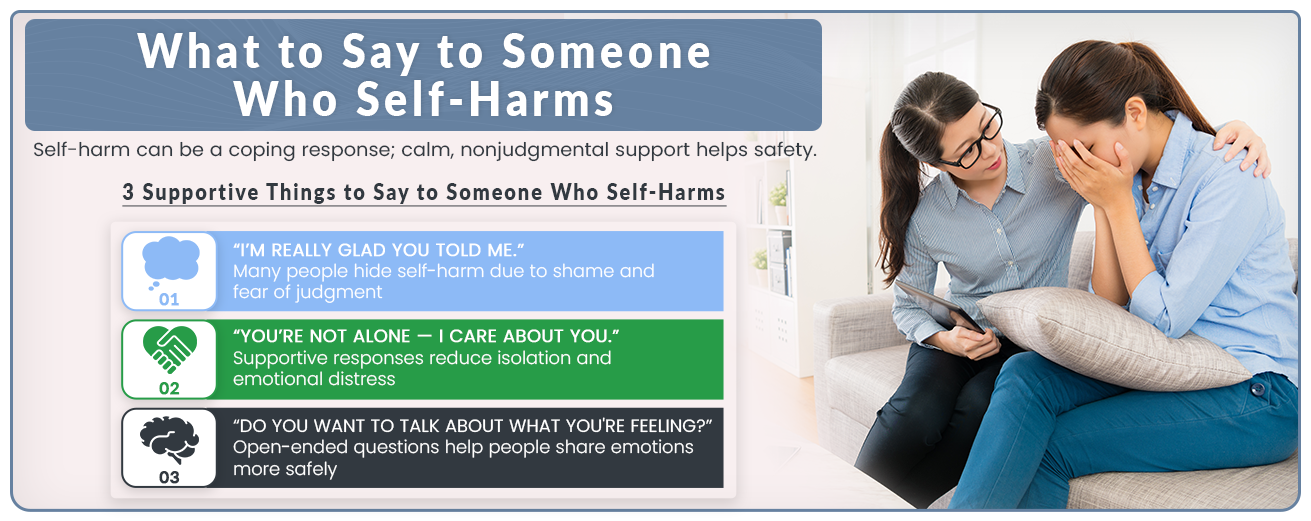
When someone is struggling, your words matter more than you think.
If you’re unsure what to say to someone who self-harms, focus on empathy, curiosity, and support — not judgment or solutions.
How to Start the Conversation
Choose a calm, private setting and approach them gently.
You might start with saying:
- “I’ve noticed some changes, and I’m really concerned about you.”
- “I care about you and want to understand what you’re going through.”
- “Are you hurting yourself? You can be honest with me.”
- “I’m here to listen whenever you’re ready to talk.”
Avoid overwhelming them with questions. Let the conversation unfold naturally.
Supportive Things to Say
Here are examples of what to say that can help them feel safe and understood:
- “I can see you’re in a lot of pain.”
- “You don’t have to go through this alone.”
- “I’m really glad you told me.”
- “Your feelings are valid, even if I don’t fully understand them yet.”
- “We can figure this out together.”
Listening without interrupting or trying to “fix” things is one of the most powerful ways to help.
What NOT to Say to Someone Who Self-Harms
Even with good intentions, certain responses can make someone feel worse or shut down communication.
Avoid saying:
- “Just stop doing it.”
- “Other people have it worse.”
- “Why would you do this to yourself?”
- “This doesn’t make sense.”
- “You’re just trying to get attention.”
These statements can increase shame, guilt, and isolation. This makes it less likely they’ll open up again.
How to Help Someone Who Self-Harms
If you’re wondering how to help someone who self-harms, your role is not to fix them but support them. The goal is to support their efforts in finding healthier coping strategies and professional help.
Validate Their Emotions
Acknowledge their feelings without validating the behavior itself.
Focus on Triggers
Help them explore what leads to self-harm urges.
Encourage Healthier Coping Skills
Suggest alternatives like:
- Journaling
- Exercise
- Talking to someone
- Creative outlets
Build a Support System
Encourage them to identify safe people they can reach out to.
Stay Consistent
Support is not a one-time conversation, but an ongoing effort.
What to Do in a Crisis Situation
- Stay calm and present
- Do not leave them alone if risk is high
- Remove harmful objects if safe to do so
- Call a mental health professional or crisis line if needed
When to Seek Professional Help

Self-harm is a serious sign that someone needs additional support.
Encourage professional help if:
- Self-harm is frequent or escalating
- Injuries are severe
- They express suicidal thoughts
- They feel unable to stop
Understanding Treatment Options for Self-Harm
Professional treatment focuses on addressing the root cause of self-harm, not just the behavior. Treatment for self-harm often focuses on building emotional regulation skills, improving distress tolerance, and addressing the root causes of behavior. Therapies like DBT can be especially effective because they teach individuals how to manage overwhelming emotions without resorting to self-injury. Long-term recovery also involves relapse prevention strategies and developing healthier ways to cope with stress.
At Harmony Hills, treatment may include:
- Cognitive Behavioral Therapy (CBT)
- Dialectical Behavior Therapy (DBT)
- Trauma Therapy
- Residential Mental Health Treatment
- Individual therapy
- Group therapy
- Medication management (if necessary)
- Holistic therapies for whole-person healing
These approaches help individuals build emotional regulation skills, process trauma, and replace self-harm with healthier coping strategies. Recovery is possible, but it takes time, consistency, and the right support system.
Frequently Asked Questions About Self-Harm
What should I say to someone who self-harms?
Start from a place of empathy. Let them know you care, you’re there to listen, and they don’t have to go through it alone.
What are the most common self-harm warning signs?
Common signs include unexplained injuries, covering up the body, emotional withdrawal, and sudden mood changes.
Is self-harm the same as a suicide attempt?
Not always. Self-harm is typically a coping mechanism, but it can increase the risk of suicidal thoughts if left untreated.
How can I help someone who self-harms without making it worse?
Listen without judgment, validate their feelings, avoid criticism, and encourage professional help.
When should someone seek professional treatment for self-harm?
If self-harm is ongoing, worsening, or paired with suicidal thoughts, professional treatment is essential.
Can therapy really help with self-harm?
Yes. Evidence-based therapies like CBT and DBT are highly effective in helping individuals manage emotions and reduce self-harming behaviors.
Get Help for Self-Harm at Harmony Hills
If you or someone you love is struggling with self-harm, you don’t have to navigate it alone.
Harmony Hills offers compassionate, individualized care designed to address the root causes of self-harm and help individuals build healthier coping strategies for long-term healing.
Start the next step today:
- Contact our team
- Verify insurance
- Learn about our programs
Or call 855.494.0357 to speak with someone who understands.

Dr. Eric Kaplan is a board-certified psychiatrist with over three decades of experience in mental health, neurology, and forensic psychiatry. He is recognized for his expertise in treating a wide range of psychiatric conditions, including depression, bipolar disorder, anxiety disorders, substance use disorders, and traumatic brain injuries, as well as for his work in complex psychopharmacology.