

When mental health symptoms become overwhelming, and substance use has developed alongside them, the path toward stability can begin with detox. For people whose primary concern is depression, anxiety, PTSD, bipolar disorder, or another mental health condition, mental health detox in Florida can look different from detox in a substance-focused program.
Knowing what to expect can make this first step feel less uncertain, for you and for the people who care about you.
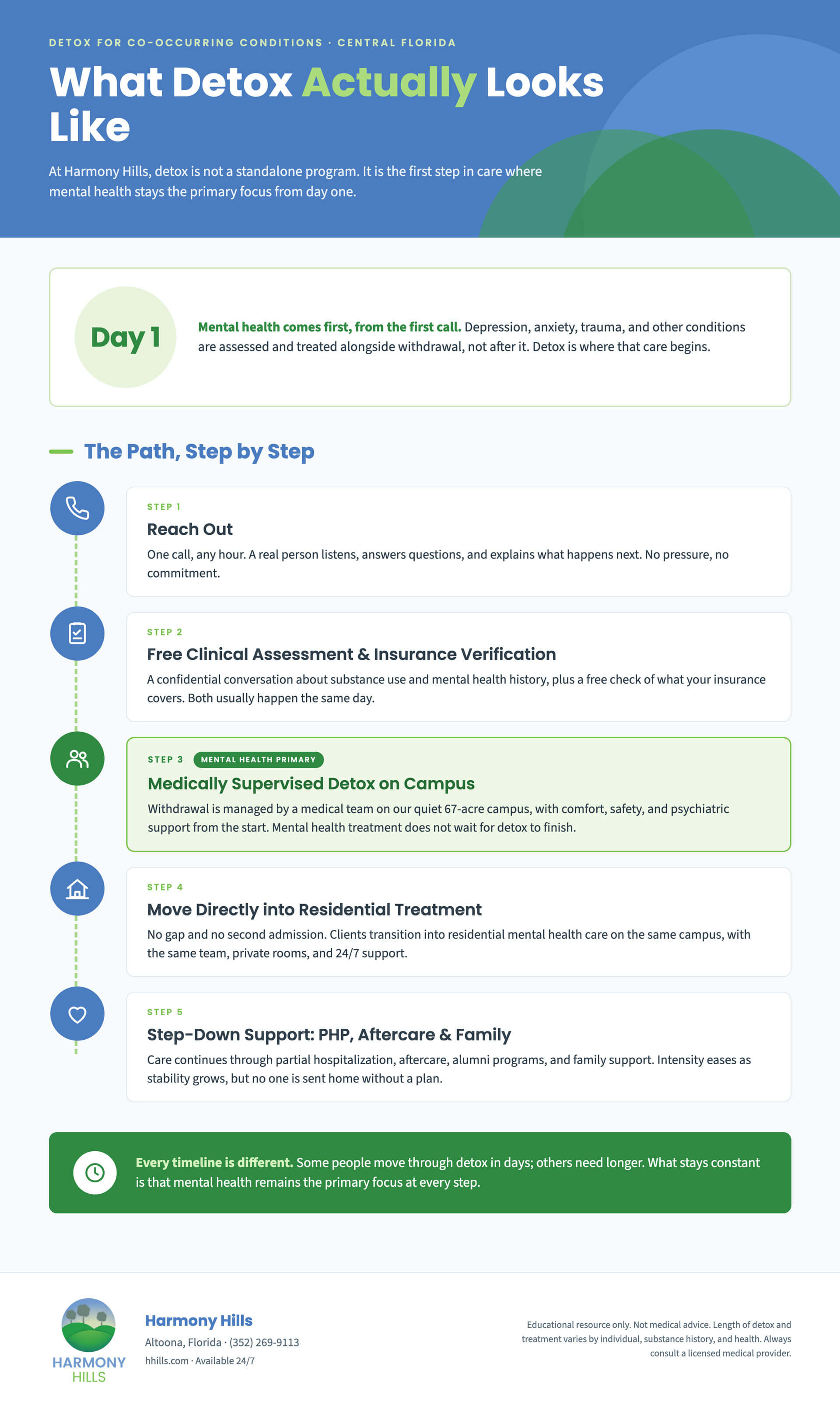
What Makes Mental-Health-Focused Detox Different?
At Harmony Hills, detox is not a standalone program. It is offered when a co-occurring substance use concern exists alongside a primary mental health diagnosis, and it is the beginning of integrated treatment for both.
Some people begin using substances while trying to cope with symptoms of depression, trauma, or anxiety. When co-occurring substance use detox happens within a residential mental health treatment setting, managing withdrawal is one part of stabilization. The mental health condition remains the primary focus throughout care.
Who Might Need Detox as Part of Mental Health Treatment?
Detox may be part of the plan when someone living with a mental health condition, such as depression, PTSD, bipolar disorder, or an anxiety disorder, has also been using alcohol or other substances in a way that requires medical support to stop safely.
You do not need to figure this out on your own. Harmony Hills offers a free clinical assessment to help determine whether detox is appropriate and which level of care fits your needs. If detox is not needed, the team can still help you explore residential mental health treatment. The goal of the assessment is to understand the whole picture, not to label anyone.
What Can You Expect During Dual Diagnosis Detox?
Medical Supervision On Campus
Detox at Harmony Hills is provided on-site, under medical supervision. Staff stay attentive to both physical and mental health needs, so you are not navigating withdrawal alone.
Mental Health Care From the Start
Because detox is connected to a primary mental health diagnosis, mental health care stays part of the picture from the beginning rather than waiting until detox ends. Withdrawal symptoms and mental health symptoms can overlap, so attention to both matters.
Support for Medical Needs
Your care team will discuss any medical support you may need during this stage. When appropriate, medication management is part of overall psychiatric care at Harmony Hills.
Emotional Support
Detox can be a vulnerable time. Compassionate staff are available to offer reassurance, encouragement, and support as you work toward stability. You are treated with dignity and respect at every step.
How Can You Prepare for Admission?
Preparing ahead can ease some of the stress of the first day:
- Call the admissions team. They will listen, answer questions, and explain your options.
- Verify your insurance. Harmony Hills offers free insurance benefits verification before admission.
- Share your current medications. Let the team know what you take so it can be considered in your care plan.
- Pack thoughtfully. Our guide on what to bring can help.
What Can Families Expect?
Watching someone you love begin detox can bring up worry and uncertainty. Families can help by offering steady encouragement, respecting the care process, and taking care of their own well-being too.
It is natural to want frequent updates or to fix things quickly. Try to focus on what you can control: being a calm, reliable presence, avoiding blame, and keeping communication open and honest. Questions about your loved one’s care and involvement options can go to the admissions team.
As treatment continues, family therapy helps loved ones understand both conditions and learn healthy ways to offer support. Families can also join weekly virtual Family Support Groups for ongoing education and connection with others in similar situations.
What Happens After Detox?
Detox is not an endpoint. It is preparation for the deeper work of treatment. Once you are stable, you move directly into residential mental health care on the same Altoona campus, with no transfer to another facility.
In residential care, treatment is built around your mental health diagnosis and includes evidence-based approaches such as CBT, DBT, and EMDR, along with individual, group, and family therapy. Co-occurring substance use continues to be addressed as part of dual diagnosis treatment, and aftercare support helps with the transition home.
Where Does Mental Health Detox in Florida Happen at Harmony Hills?
Harmony Hills provides detox on-site at its residential campus in Altoona, in Lake County. Clients receive care in the same structured, supportive environment where they continue treatment. The campus serves individuals and families throughout Central Florida, including Orlando, Leesburg, and the surrounding communities.
Frequently Asked Questions
How long does detox for co-occurring conditions take?
Length varies from person to person, depending on factors such as the substances involved and overall health. Your care team will talk through what to expect.
Will my mental health medications be considered during detox?
Let the admissions team know about any current medications so they can be considered as part of your care plan.
Is detox uncomfortable?
Withdrawal can be difficult, which is why detox takes place under medical supervision. Staff are focused on supporting your safety and comfort throughout.
Can family be involved?
Yes. Family involvement grows as treatment continues through family therapy and weekly virtual Family Support Groups.
What if my primary concern is mental health, not substance use?
That is exactly the situation integrated detox is designed for. Your mental health remains the primary focus while withdrawal is managed under medical supervision.
Take the First Step
If you or someone you love is living with mental health symptoms and substance use, help is available. Our admissions team can answer your questions, and we offer a free insurance benefits verification and clinical assessment to help determine the right level of care. Call 352-269-9113 or verify your insurance online.
If you are experiencing severe withdrawal symptoms or are in immediate danger, call 911. For a mental health crisis, call or text 988.
Dr. Eric Kaplan is a board-certified psychiatrist with over three decades of experience in mental health, neurology, and forensic psychiatry. He is recognized for his expertise in treating a wide range of psychiatric conditions, including depression, bipolar disorder, anxiety disorders, substance use disorders, and traumatic brain injuries, as well as for his work in complex psychopharmacology.