

Borderline personality disorder (BPD) is a complex mental health condition that can deeply affect how individuals think, feel, and relate to others. If you’re trying to understand borderline personality disorder relationships, you’re not alone. This is one of the most searched and misunderstood aspects of BPD.
For those living with BPD and the people who love them, relationships can feel intense, confusing, and at times overwhelming. Understanding how BPD affects relationships is the first step toward building healthier, more stable connections.
At Harmony Hills, we provide compassionate, evidence-based care for individuals struggling with BPD and co-occurring mental health conditions. With the right support, healing and healthier relationships are possible.
What is Borderline Personality Disorder (BPD)?

Borderline personality disorder is a Cluster B personality disorder characterized by emotional instability, impulsive behavior, and difficulty maintaining relationships.
People with BPD often experience:
- Intense fear of abandonment
- Rapid mood swings
- Unstable self-image
- Impulsive or self-destructive behaviors
- Difficulty regulating emotions
- Chronic feelings of emptiness
Because emotions are experienced so intensely, relationships can quickly become strained or unstable.
Co-Occurring Conditions That Can Influence BPD and Relationships
Borderline personality disorder is rarely experienced in isolation. Many individuals with BPD also struggle with co-occurring mental health conditions that can intensify emotional instability and further impact relationships.
Understanding these underlying conditions helps explain how BPD affects relationships and why interactions can feel so overwhelming for both the individual and their loved ones.
Anxiety Disorders
Anxiety disorders are one of the most common co-occurring conditions in individuals with BPD. Chronic worry, fear, and hypervigilance can make relationships feel unsafe or unpredictable.
People with both BPD and anxiety may:
- Constantly worry about being rejected or abandoned
- Overanalyze conversations or behaviors from others
- Seek frequent reassurance from partners or loved ones
- Experience panic when relationships feel uncertain
This heightened sensitivity can create tension in borderline personality disorder relationships, as partners may feel pressure to provide constant validation.
Depression
Depression disorders often coexist with BPD and can deepen feelings of emptiness, hopelessness, and disconnection.
Individuals experiencing both may:
- Withdraw emotionally or physically from relationships
- Struggle to communicate their needs
- Feel unworthy of love or support
- Lose interest in maintaining connections
Depression can make it difficult to engage in healthy relationship behaviors, contributing to cycles of isolation and conflict in BPD and relationships.
Post-Traumatic Stress Disorder (PTSD)
Many individuals with BPD have a history of trauma, making Post-Traumatic Stress Disorder (PTSD) a significant co-occurring condition.
PTSD can affect relationships by causing:
- Emotional triggers tied to past experiences
- Difficulty trusting others
- Intense reactions to perceived threats or rejection
- Avoidance of emotional closeness
In relationships, this may look like sudden withdrawal, emotional outbursts, or difficulty feeling safe with others. Trauma responses often overlap with BPD symptoms, adding complexity to how BPD can affect relationships.
Substance Use Disorders
Substance use is another common co-occurring issue, often used as a way to cope with overwhelming emotions.
Substance use can:
- Lower inhibitions and increase impulsive behavior
- Intensify emotional instability
- Lead to conflict, mistrust, or dishonesty in relationships
- Interfere with communication and emotional regulation
When combined with BPD, substance use can significantly strain relationships and make conflict more frequent or intense.
Why Co-Occurring Conditions Matter in Relationships
When BPD exists alongside anxiety, depression, trauma, or substance use, emotional responses can become more intense, unpredictable, and difficult to manage.
These overlapping challenges often contribute to:
- Miscommunication and misunderstandings
- Heightened emotional reactions
- Difficulty maintaining trust and stability
- Cycles of conflict and reconciliation
Recognizing these underlying conditions is essential for understanding borderline personality disorder in relationships. It’s about finding the right path toward healing for both the individual and their loved ones.
Signs of BPD in Relationships
BPD doesn’t just affect the individual; it shapes how they connect with others on a basic level.
Common signs include:
- Intense, fast-moving relationships
- Fear of abandonment leading to clinginess or withdrawal
- Sudden emotional shifts toward loved ones
- Difficulty trusting others
- Episodes of anger, conflict, or emotional outbursts
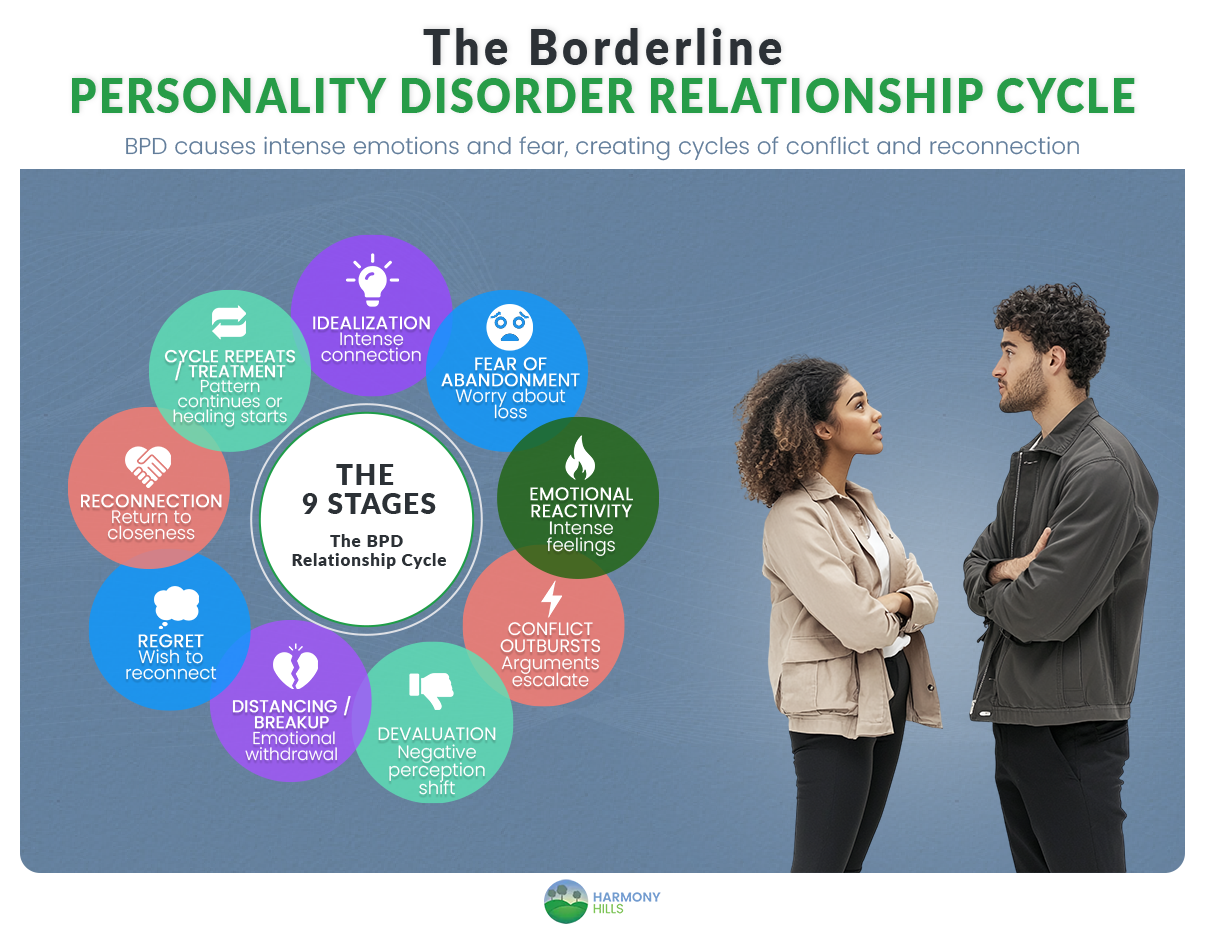
- Idealizing someone one moment and devaluing them the next
This pattern is sometimes referred to as “splitting,” where someone sees others as all good or all bad, depending on their emotional state.
How BPD Affects Romantic Relationships
Romantic relationships are often where BPD symptoms are most visible.
Individuals with BPD may experience:
Intense Emotional Highs and Lows
Relationships may start with a deep connection and passion, but quickly shift into conflict or instability.
Fear of Abandonment
Even small misunderstandings can trigger fears of rejection, leading to:
- Clingy behavior
- Reassurance-seeking
- Emotional reactions to perceived distance
Push-Pull Dynamics
Someone with BPD may crave closeness, then feel overwhelmed and pull away. This creates a cycle that can be confusing for both partners.
Codependency and Emotional Reliance
Partners may feel pressure to:
- Provide constant reassurance
- Stabilize emotions
- Avoid conflict at all costs
Over time, this can lead to burnout and emotional exhaustion.
How BPD Can Affect Family Relationships
Family relationships are often deeply impacted by BPD, especially when symptoms begin in adolescence.
Common challenges include:
- Frequent conflict or emotional outbursts
- Difficulty respecting boundaries
- Miscommunication or misunderstanding
- Cycles of closeness and distance
Parents and siblings may feel:
- Confused about how to help
- Emotionally drained
- Unsure how to respond to behavior
Despite this, many individuals with BPD have strong emotional bonds with family members. They may simply struggle to express and regulate those emotions.
How BPD Can Affect Friendships
Friendships can also be unstable when BPD is untreated.
Individuals may:
- Form intense friendships quickly
- Expect high levels of emotional support
- Struggle with perceived rejection or exclusion
- End friendships abruptly after conflict
This can lead to:
- Social isolation
- Difficulty maintaining long-term friendships
- Feelings of loneliness and abandonment
Understanding these patterns can help both individuals and their friends navigate challenges with more compassion.
Why BPD and Relationships Can Feel So Intense
At the core of BPD is difficulty regulating emotions.
This means:
- Feelings are experienced more intensely
- Reactions happen more quickly
- It takes longer to return to baseline
Because relationships are emotional by nature, they often become the place where these challenges show up most.
This is why how BPD affects relationships is such a critical part of treatment and recovery.
Can People With BPD Have Healthy Relationships?
Yes. But it typically requires support, self-awareness, and skill-building to maintain healthy relationships.
With treatment, individuals with BPD can:
- Develop emotional regulation skills
- Improve communication
- Build stable, trusting relationships
- Reduce conflict and impulsivity
Healthy relationships are absolutely possible. They just require the right tools.
BPD Treatment and Relationship Improvement
Treatment plays a critical role in improving borderline personality disorder relationships. While BPD can make relationships feel unstable or overwhelming, the right therapeutic approach can help individuals develop the skills needed to build healthier, more balanced connections.
At Harmony Hills, treatment focuses on both individual healing and relationship development. The whole goal is to better understand their emotions, improve communication, and create more stable interpersonal dynamics.
Dialectical Behavior Therapy (DBT)
Dialectical Behavior Therapy (DBT) is widely considered the gold standard for treating BPD. It is specifically designed to help individuals manage intense emotions and improve relationship functioning.
DBT teaches essential skills such as:
- Emotional regulation: Learning how to understand and manage intense emotional responses
- Distress tolerance: Building the ability to cope with difficult situations without impulsive reactions
- Mindfulness: Staying present and aware rather than reacting automatically
- Interpersonal effectiveness: Communicating needs clearly while maintaining respect for others
These skills directly improve relationship stability by reducing emotional reactivity, increasing self-awareness, and helping individuals respond more thoughtfully in interpersonal situations.
Cognitive Behavioral Therapy (CBT)
Cognitive Behavioral Therapy (CBT) focuses on identifying and changing negative thought patterns that contribute to emotional distress and relationship challenges.
Through CBT, individuals learn to:
- Recognize distorted or unhelpful thinking patterns
- Challenge beliefs that lead to conflict or insecurity
- Replace harmful behaviors with healthier responses
- Improve communication and problem-solving skills
By shifting how individuals interpret situations and respond to them, CBT can significantly reduce misunderstandings and conflict in relationships.
Trauma-Informed Therapy
Many individuals with BPD have experienced trauma, which can deeply influence how they relate to others. Trauma-informed therapy addresses the root causes of emotional dysregulation and relationship difficulties.
This approach helps individuals:
- Process past traumatic experiences in a safe, supportive environment
- Understand emotional triggers and reactions
- Reduce fear-based responses in relationships
- Build a stronger sense of safety and trust
Addressing trauma is essential for long-term healing, as unresolved trauma can continue to impact how BPD affects relationships if left untreated.
Residential Mental Health Treatment
For individuals experiencing severe symptoms or significant relationship instability, residential mental health treatment provides a higher level of care.
In a residential setting, individuals benefit from:
- Structured support throughout the day
- Intensive therapy with licensed professionals
- A safe, distraction-free environment to focus on healing
- Consistent routines that promote emotional stability
This level of care allows individuals to step away from stressful environments and fully focus on developing the skills needed for long-term recovery and healthier relationships.
How Treatment Improves Relationships
With consistent treatment and support, individuals with BPD can make meaningful progress in their relationships.
Over time, they can learn to:
- Regulate emotional responses instead of reacting impulsively
- Communicate needs and boundaries more clearly
- Build trust and consistency with others
- Reduce conflict and misunderstandings
- Develop healthier, more stable relationship patterns
While progress takes time, treatment can transform BPD and relationships from chaotic and painful experiences into more balanced, fulfilling connections.
How to Cope With a Partner With BPD

If you’re in a relationship with someone with BPD, support matters but boundaries do as well.
Helpful strategies include:
- Set clear, consistent boundaries
- Avoid taking emotional reactions personally
- Encourage professional treatment
- Practice patience and empathy
- Take care of your own mental health
You cannot “fix” someone who has BPD. But you can support them while protecting your own personal well-being.
Frequently Asked Questions About BPD and Relationships
Does BPD affect relationships?
Yes. BPD can significantly impact relationships due to emotional instability, fear of abandonment, and difficulty regulating emotions.
How does BPD affect romantic relationships?
BPD can lead to intense emotional highs and lows, fear of rejection, and push-pull dynamics that create instability in romantic relationships.
Can someone with BPD have a healthy relationship?
Yes. With treatment and skill-building, individuals with BPD can develop stable, healthy, and fulfilling relationships.
How do you cope with a partner with BPD?
Set boundaries, practice patience, encourage treatment, and prioritize your own mental health while offering support.
Why are relationships so difficult with BPD?
Because BPD affects emotional regulation, individuals may experience intense reactions, fear abandonment, and struggle with communication.
What is the best treatment for BPD?
Dialectical Behavior Therapy (DBT) is considered the most effective treatment for BPD, along with other therapies and structured care.
Find BPD Treatment at Harmony Hills
If you or someone you love is struggling with BPD and relationships, you don’t have to navigate it alone. The emotional intensity, conflict, and instability that often come with borderline personality disorder can feel overwhelming. But with the right support, meaningful change is possible.
At Harmony Hills, we provide specialized, compassionate care designed to address the root causes of BPD, not just the symptoms. Our team works closely with each individual to develop personalized treatment plans that focus on emotional regulation, communication skills, and building healthier, more stable relationships.
Through evidence-based therapies like Dialectical Behavior Therapy (DBT), trauma-informed care, and structured support, we help individuals:
- Gain control over intense emotions
- Improve communication and relationship skills
- Reduce impulsive behaviors and conflict
- Rebuild trust with loved ones
- Create a foundation for long-term stability and connection
Whether you’re seeking help for yourself or supporting someone you care about, taking the first step can make all the difference.
Contact us today to start your journey toward healthier relationships. We’re here to answer your questions, guide you through your options, and help you take the next step toward healing.

Dr. Eric Kaplan is a board-certified psychiatrist with over three decades of experience in mental health, neurology, and forensic psychiatry. He is recognized for his expertise in treating a wide range of psychiatric conditions, including depression, bipolar disorder, anxiety disorders, substance use disorders, and traumatic brain injuries, as well as for his work in complex psychopharmacology.